On this page
A bottle warmer may make a repeated warm-water routine easier, especially when several caregivers prepare bottles. Its value comes from the routine it replaces: retrieving warm water, monitoring the bottle and checking the temperature. It does not create a requirement to warm every bottle, and it does not turn stored milk into a fresh batch.
Start with whether warm bottles are part of the feeding arrangement, then compare a countertop or portable model with an already-owned container and warm water. The U.S. prices below were checked in October 2026. They describe named manufacturer listings, not a national price range or a promise that the same promotion will be available later.
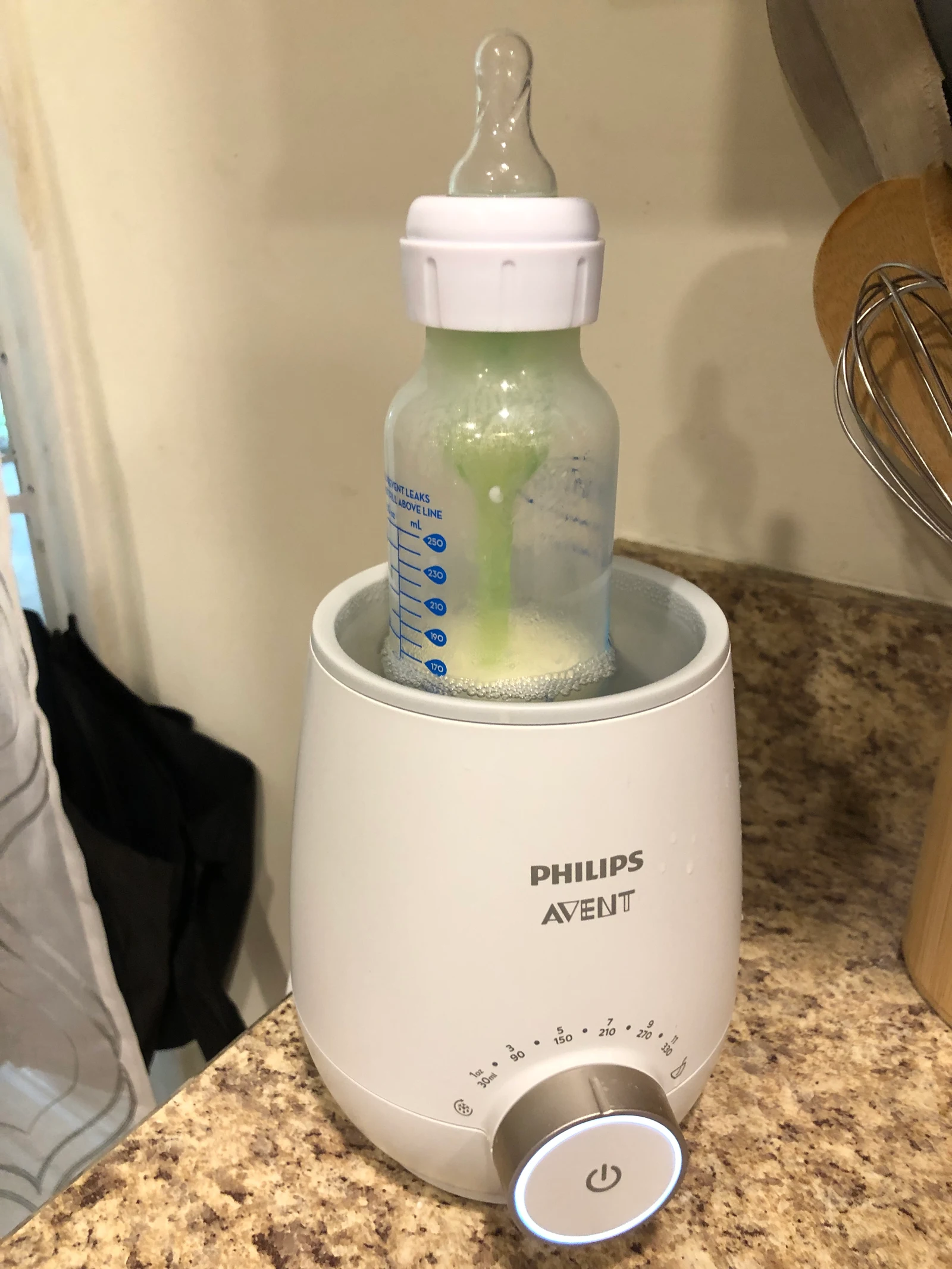
Hero photograph: a Philips Avent warmer, a different model from the priced Baby Brezza examples. Photo by Famartin, CC BY-SA 4.0. Resized and converted to WebP; the image and its generated crops retain that license.
Key figures
- $69.99 Baby Brezza countertop bottle warmer
- $99.99 Baby Brezza portable bottle warmer
Countertop and portable models have different prices
| Named manufacturer example | Base price | Displayed offer |
|---|---|---|
| Baby Brezza Bottle & Breastmilk Warmer | $69.99 | $48.99, advertised as 30% off |
| Baby Brezza Superfast Portable Bottle Warmer | $99.99 | $77.99, advertised as 22% off |
| Difference between these models | $30.00 | $29.00 between the displayed offers |
Source note: Baby Brezza’s U.S. product collection and Formula Pro Advanced page’s related product listings checked October 2026. Confirm the selected item, offer terms, accessories, taxes and delivery. These models have different features, so the price difference is not a measure of identical performance.
The portable example costs $30 more at base pricing. That premium may have a purpose for outings, but a rechargeable device adds charging and compatibility checks.
A countertop model that stays by an outlet solves a different problem. Avoid buying both versions before knowing where warm bottles will be prepared.
If the household already has a container for a warm-water bath, its incremental purchase cost can be $0. That alternative still uses water and caregiver attention. The comparison is whether the appliance makes the repeated job easier enough to justify its cost, not whether hand warming has no effort at all.
Check what the package includes before adding a bottle adapter or other accessory. A description saying that a device works with many bottles is not proof it connects directly to every neck size or bottle material. Use the instructions for the exact bottle and warmer combination rather than an adapter that merely appears to fit.
Repeated use lowers hardware cost per warming
For a labeled example, assume two warmings daily for 180 days: 360 uses. At the countertop model’s $69.99 base price, hardware allocation is about $0.19 per use. At the displayed $48.99 promotion, it is about $0.14. Electricity, water, maintenance and cleaning are excluded.
If that same device is used only 60 times, base-price hardware allocation rises to about $1.17 per use. These calculations help evaluate a convenience purchase; they are not a reason to warm extra bottles or extend feeding beyond the baby’s routine. A device that is used briefly may still solve a difficult task, but its price should be judged against that shorter period.
The daycare bottle supplies guide also matters because the caregiver may already have a permitted warming method. Ask about the facility’s process before purchasing an appliance for a job handled elsewhere. Keep the household’s bottle compatibility and cleaning responsibilities separate from the center’s equipment.
Temperature checks still happen before feeding
CDC says infant formula does not need warming before feeding. If warming is chosen, it describes warm running water and checking a few drops on the wrist. It warns against microwaves because uneven heating can create hot spots that burn the baby’s mouth or throat.
A warmer’s timer or temperature control does not remove the final check. Starting temperature, liquid amount, bottle shape and material can affect warming. Use the device instructions and the milk-handling guidance together; do not substitute a memorized cycle length from a different bottle or load.
CDC’s breast-milk guidance similarly says milk can be served cold or at room temperature. For warming, keep the container sealed and use warm, not hot, water rather than a microwave or direct stove heating. Gently swirl to mix separated fat. A warmer should fit within those handling instructions rather than encouraging hotter treatment.
A bottle warmer does not establish that powdered formula was prepared using the required water temperature or that feeding parts were sanitized. Ask the baby’s clinician about individual feeding or health concerns. Follow the formula label and the chosen device’s instructions; never dilute formula to change its warming behavior.
Feeding and storage clocks remain in force
CDC gives prepared formula two hours after preparation and one hour once feeding starts. If it will not be used within two hours, refrigerate promptly and use within 24 hours. Warming an older bottle does not create a new preparation time, and unfinished formula from a feeding should be discarded.
Breast milk has a different handling schedule. CDC says milk brought to room temperature or warmed should be used within two hours, and feeding leftovers within two hours after the baby finishes. Its thawed-milk refrigerator clock starts when the milk has completely thawed, not when warming begins. Labeling storage and preparation times helps caregivers avoid mixing these rules.
The breast milk cooler guide addresses transport before warming. An insulated bag and a warmer handle different portions of the day. Do not count a portable warmer as refrigerated storage or assume that keeping a bottle warm throughout an outing is the same as warming shortly before a feed.
Cleaning and placement determine daily convenience
Read the permitted cleaning and descaling method before buying. A warming chamber that regularly collects water can add maintenance even when its controls are simple. Budget a cleaner only when the manual calls for it, and do not turn a manufacturer’s optional accessory listing into an invented yearly operating cost.
Place the device where its cord, hot water and warmed containers can be handled safely under its instructions. A kitchen location shared with food preparation may require more clearing and cleaning than a product photograph suggests. Portable versions need a charging plan and a way to clean their food-contact parts while away.
The glass versus plastic bottle comparison keeps bottle materials and replacement spending in the same decision. Test a small workable setup before buying several warmers or a large bottle collection. The better purchase is the one that fits the household’s feeding and cleaning routine at its full delivered price.
Questions people ask
Does every formula bottle need warming?
No. CDC says formula does not need to be warmed. The purchase depends on the household's chosen feeding routine, not a universal requirement.
Can warming reset the formula clock?
No. Preparation time and feeding-start time still control the storage limits. Warming does not make an older bottle newly prepared.
Can a microwave replace a warmer?
CDC advises against microwaving formula or breast milk because uneven heating can produce hot spots. Use the permitted warm-water method instead.
Does the portable price include every adapter?
Do not assume so. Check the exact package and the instructions for the household's bottles before comparing delivered totals.
Where these figures come from
- Current Bottle Warmer and Portable Warmer Offers Baby Brezza · babybrezza.com
- Bottle Warmer Related Product Prices Baby Brezza · babybrezza.com
- Infant Formula Preparation and Storage Centers for Disease Control and Prevention · cdc.gov
- Breast Milk Storage and Preparation Centers for Disease Control and Prevention · cdc.gov
Figures last checked October 2026.