On this page
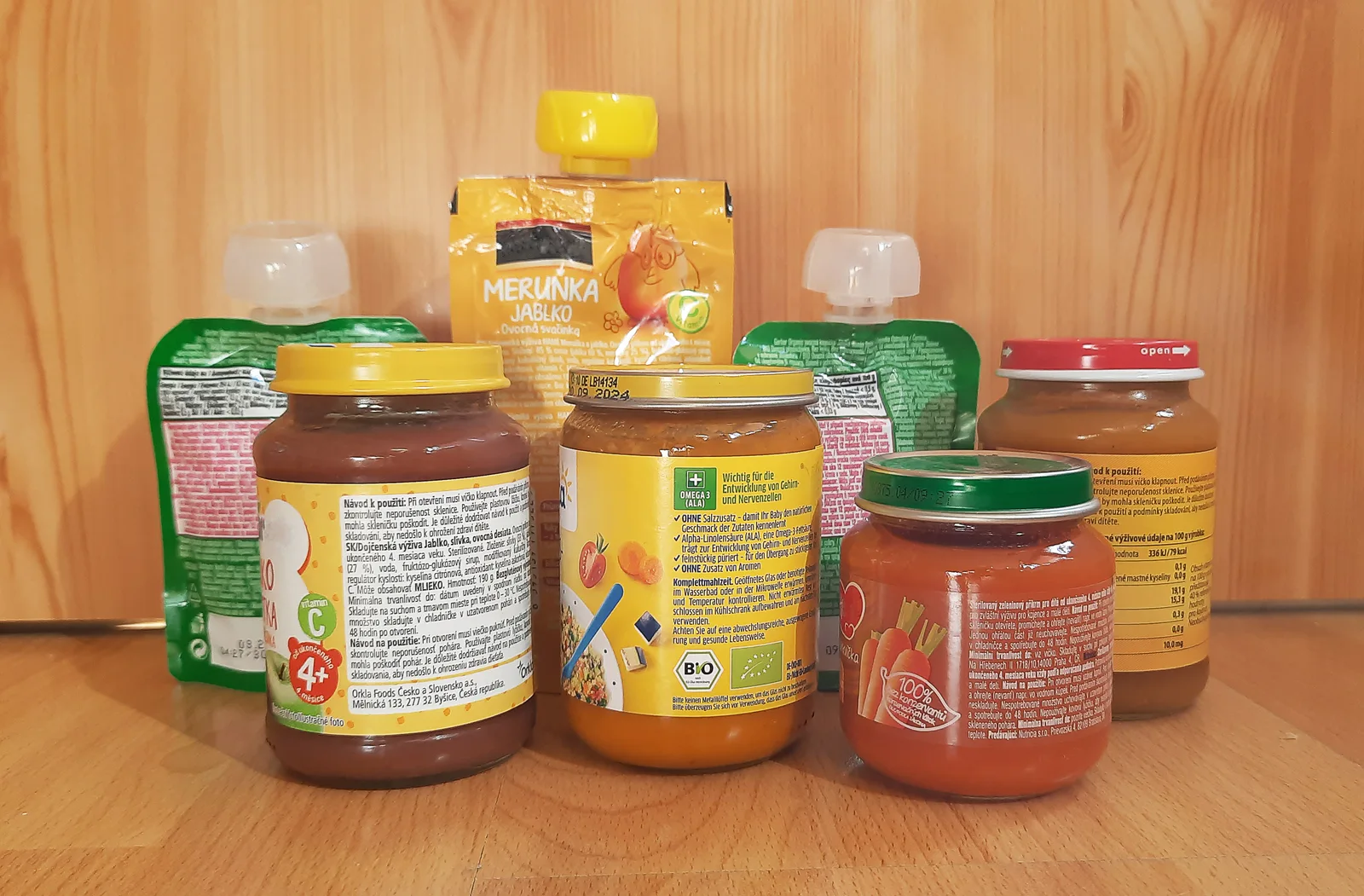
Homemade baby food can have a low ingredient cost, but compare what will be eaten rather than a grocery bag’s total weight. Peel, preparation losses, unwanted portions and equipment purchases can narrow the saving. Commercial jars add convenience and a sealed package, while their remaining contents still have handling limits after opening.
The example below uses a published banana price, USDA edible yield and a manufacturer’s four-ounce jar size. It shows how to calculate the ingredient baseline and substitute a store’s jar price. It does not invent a national jar price, claim that fruit alone supplies a balanced feeding plan or prescribe a portion size.
Banana ingredient cost is about 25.5 cents per four ounces
| Published input or calculation | Value | How it enters the comparison |
|---|---|---|
| BLS banana price, August 2026 | $0.652 per lb purchased | U.S. city-average price, not a local quote |
| USDA peeled yield | About 0.64 lb per lb purchased | Removes the peel from usable weight |
| Edible weight from a purchased pound | About 10.24 oz | 0.64 multiplied by 16 |
| Ingredient allocation per edible ounce | About $0.0637 | $0.652 divided by 10.24 |
| Ingredient allocation per 4 edible ounces | About $0.255 | Excludes other ingredients and preparation costs |
| Named Beech-Nut banana jar | 4 oz | Commercial comparison size |
Source note: BLS series APU0000711211, August 2026; USDA Food Buying Guide fruit yield table for regular whole bananas; and Beech-Nut’s Naturals banana jar page, checked October 2026. Calculations use the published approximate edible yield. They compare weight ounces, not fluid ounces or feeding recommendations.
The banana price includes the peel, so dividing 65.2 cents by sixteen ounces would understate the edible ingredient cost. USDA’s approximate yield produces about 10.24 edible ounces instead. The guide is a buying reference, not a guarantee that every individual pound yields exactly that weight after household preparation.
Use the local grocery receipt when making a purchase decision. BLS’s monthly average establishes a documented benchmark, while a household may pay more or less for its chosen bananas. The series does not establish that organic fruit, every region or every store has the same price.
The jar’s checkout price can be inserted without guessing a range
Beech-Nut lists its Naturals banana puree as a single four-ounce jar, with bananas and lemon juice concentrate. The manufacturer page establishes the named product and contents but does not supply a universal store price. Read the selected store’s current package price and compare the same edible weight.
As a clearly hypothetical checkout example, a four-ounce jar priced at $1.50 would cost 37.5 cents per ounce. Against the published-input banana calculation, its ingredient-only gap would be about $1.245 per four ounces. The $1.50 is a worksheet assumption, not a quoted Beech-Nut, store or national price.
Replace that assumption with the price paid. If a multi-pack is discounted, divide its entire price by the total food weight, then decide whether the household can use every jar. Shipping and a minimum purchase can make a delivered case cost more than its headline unit price suggests.
A homemade banana preparation and the named commercial puree are not identical recipes. The calculation cannot establish equivalent texture, nutritional composition or suitability for a particular baby. It is a cost comparison with its ingredients and limitations visible, rather than a health claim about one production method.
Preparation waste changes cost per ounce used
The 25.5-cent figure assumes the edible banana output is used. If only three-quarters of that output is used and the rest is discarded, the ingredient allocation becomes about 34.0 cents per four ounces eaten. If only half is used, it becomes about 50.9 cents. These are hypothetical waste tests, not measured household loss rates.
- All food used25.5 cents
- Three-quarters used34.0 cents
- Half used50.9 cents
BLS banana price and USDA peeled yield; this article's hypothetical waste tests. Ingredient cost per four edible ounces, other preparation costs excluded.
Jarred food has the same distinction between purchased and consumed weight. In the hypothetical $1.50 example, using only two of the four ounces and discarding the remainder allocates 75 cents per ounce used. That is why the cheapest large package can lose its advantage when it supplies more than the household can use within the safe window.
Track the remaining food in a clean storage container separately from food already offered to the baby. FDA advises transferring a serving to a dish rather than feeding directly from the jar and refrigerating it afterward. Discard food left in the feeding dish; putting it back does not restore unused contents.
The reusable food pouch comparison evaluates another container purchase. A pouch’s capacity is not evidence that its contents will all be eaten, and buying reusable packaging does not remove cleaning or leftover limits.
A dedicated appliance needs enough saving to repay its price
Baby Brezza’s named One Step Food Maker listing has a $149.99 base price and a $104.99 promotional price at the check. These are separate purchase benchmarks, not ingredients. If suitable equipment is already available, its full original purchase price should not be charged again to every new baby-food batch.
Using the hypothetical $1.50 jar and about 25.5-cent ingredient comparison, recovering $104.99 requires roughly 85 four-ounce equivalents of that ingredient-only saving. Recovering $149.99 requires roughly 121. Both counts round up, and neither includes extra ingredients, electricity, storage containers, cleaning or discarded food.
This example shows why a low-cost ingredient does not automatically justify a dedicated machine. It also does not establish that the machine is required to prepare banana food. The food maker cost guide separates its steaming and blending functions from preparation that existing equipment can perform.
Assigning a dollar value to caregiver time is optional, but keep the assumption visible if it is included. Do not claim a measured preparation-time saving from a manufacturer’s shortest cycle. Shopping, cleaning, portioning and cooling remain parts of the household routine.
Storage limits favor small batches and clean portions
FDA’s storage table lists homemade baby foods for one to two days in the refrigerator. Its narrative freezing instructions say up to three months, while the table shows three to four months. This guide uses the shorter three-month advice for planning and does not stretch the refrigerator period to use up an economical batch.
FDA also says baby food left without refrigeration or a cold source for more than two hours should not be used. A jar’s unopened shelf life does not become the storage life of homemade food placed in that jar. Check seals and label instructions for commercial products and date homemade storage containers.
Freezing portions that can be used separately can reduce the need to thaw an entire batch. The household still needs suitable containers and a clear date record. Do not add an assumed freezing yield to the price calculation without checking how much prepared food was produced and retained.
CDC describes introducing complementary foods around six months when babies are developmentally ready. Ask the child’s clinician about readiness, texture, dietary variety and allergy questions. A jar’s marketing age or a cheap ingredient does not select a feeding plan.
The starting solids guide addresses that separate decision. Once the plan is established, a mixed purchasing approach can be practical: small homemade batches when preparation fits the schedule and accepted commercial food when convenience matters. Compare each choice against food used safely, not an all-or-nothing label.
Questions people ask
How was the 25.5-cent banana figure calculated?
The $0.652-per-pound BLS price is divided by USDA's approximate 10.24-ounce edible yield, then multiplied by four. It is an ingredient allocation, before other costs.
Is $1.50 a published jar price?
No. It is an explicitly hypothetical checkout input used to explain the calculation. Replace it with the current price of the jar or package the household buys.
Does four ounces mean one feed?
No. It is the named jar's package size and the worksheet's comparison unit. Feeding amounts and texture depend on the child's plan.
Can a large homemade batch stay refrigerated for a week?
FDA lists one to two days for homemade baby food in the refrigerator. Plan a smaller batch or freeze under safe instructions rather than extending that period.
Where these figures come from
- Bananas: Monthly U.S. City-Average Price U.S. Bureau of Labor Statistics · data.bls.gov
- Food Buying Guide: Fruit Edible Yields U.S. Department of Agriculture · foodbuyingguide.fns.usda.gov
- Naturals Banana Jar: Ingredients and Package Size Beech-Nut · beechnut.com
- One Step Food Maker Price and Functions Baby Brezza · babybrezza.com
- Baby Food Handling and Storage U.S. Food and Drug Administration · fda.gov
- Infant and Toddler Nutrition Questions Centers for Disease Control and Prevention · cdc.gov
Figures last checked October 2026.